
Utopias – by which I mean the societies depicted in utopian literary texts – often have a founding moment and a founding myth. This is partly to ensure permanence. In order to endure, the first generation and subsequent generations of utopians (meaning the citizens of a utopia) have to believe in the social organisation, and be committed to preserving it. Thus it’s necessary to have a moment in time when the utopia comes into being, a moment of revolution or discovery, and sometimes this involves the deception of the ‘new’ people. For Plato’s Republic to be founded, everyone over the age of ten is sent away. Then this very juvenile population are indoctrinated into believing that they were formed in the earth from different metals, gold, silver and iron or copper. This naturalises the class divisions, though it’s necessary that movement among classes between generations is possible. So: first a founding moment, then a founding myth.
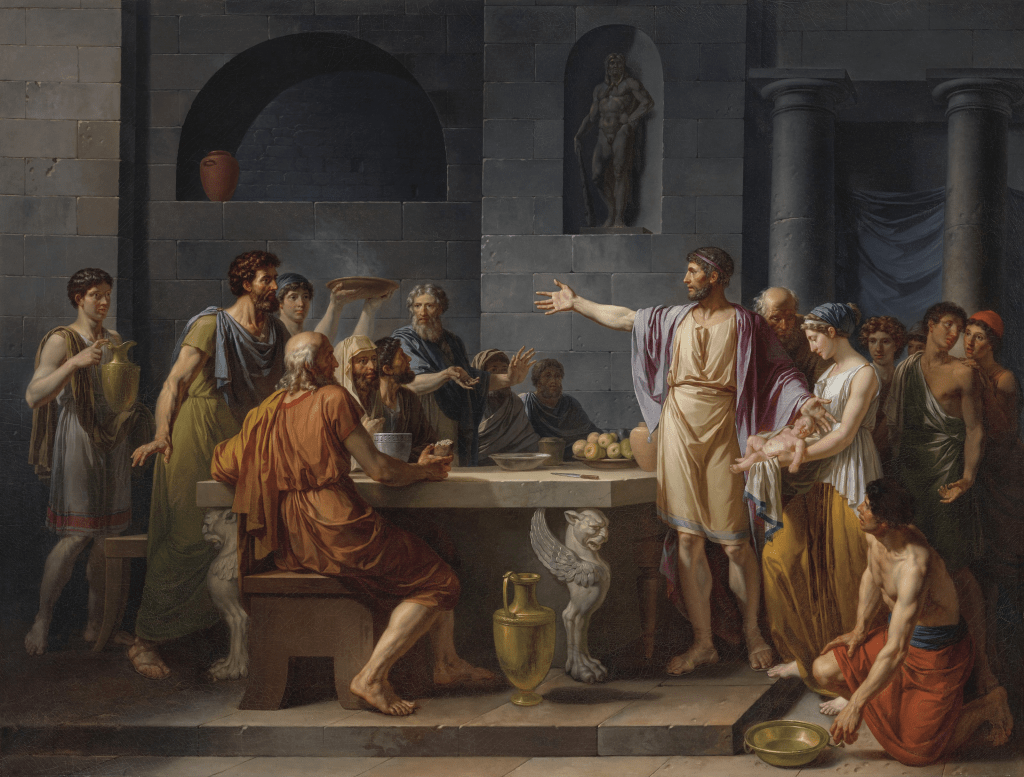
This story about origins also makes subsequent generations committed to the society – its laws and structures. The legendary (?) founder of the Spartan republic, Lycurgus, established the perfect constitution and required his citizens swear loyalty to it while he travelled to consult the oracle of Apollo at Delphi. He never returned, though he did send in writing the oracle’s approval of his constitution. This meant that the Spartans were never relieved of their oaths, and, perhaps, no subsequent lawgiver was able to achieve the same authority as Lycurgus and thus be able to introduce reforms. The lawgiver’s authority was embedded in the constitution more firmly because he had vanished.
Here’s a thought, or a question: does utopian thinking require that we create a fictionalised past in order to ensure a more stable future?
Happy publication day, new little book. Go forth and find readers.