
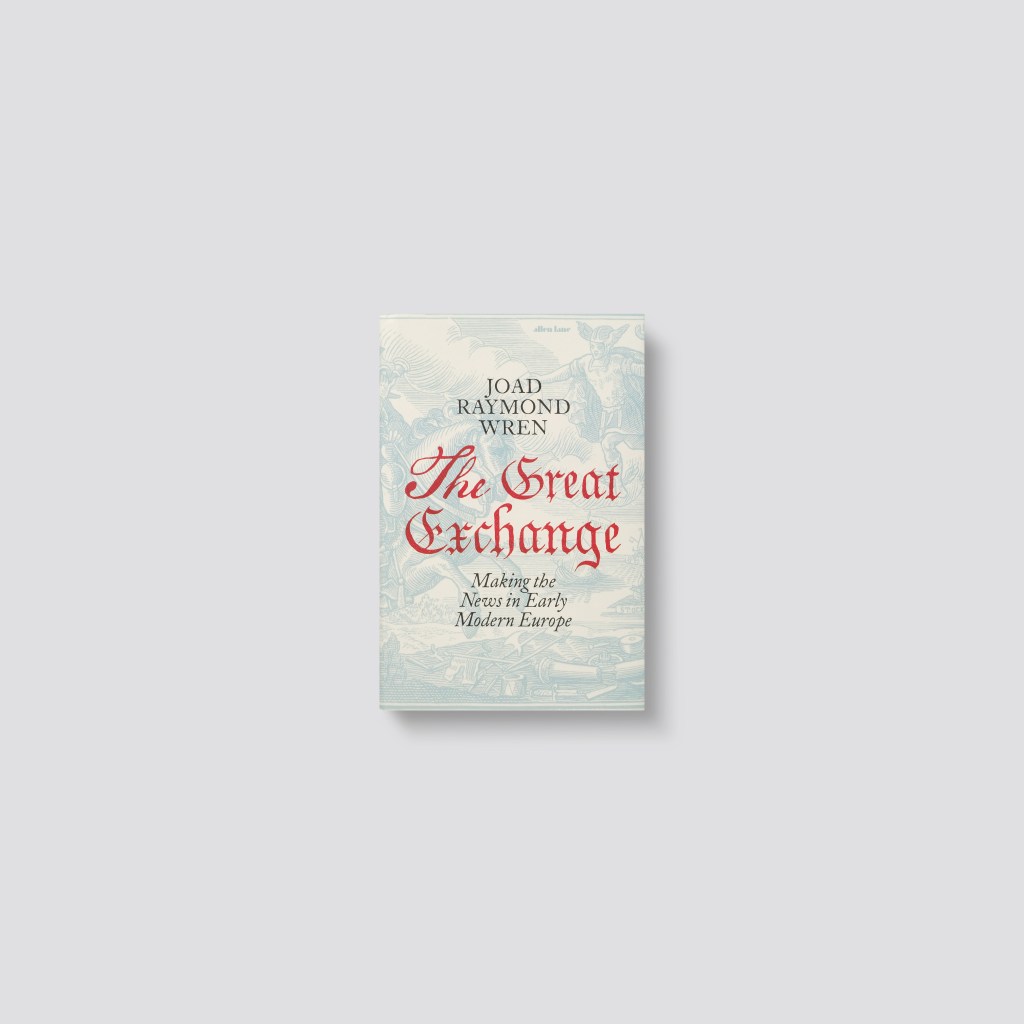
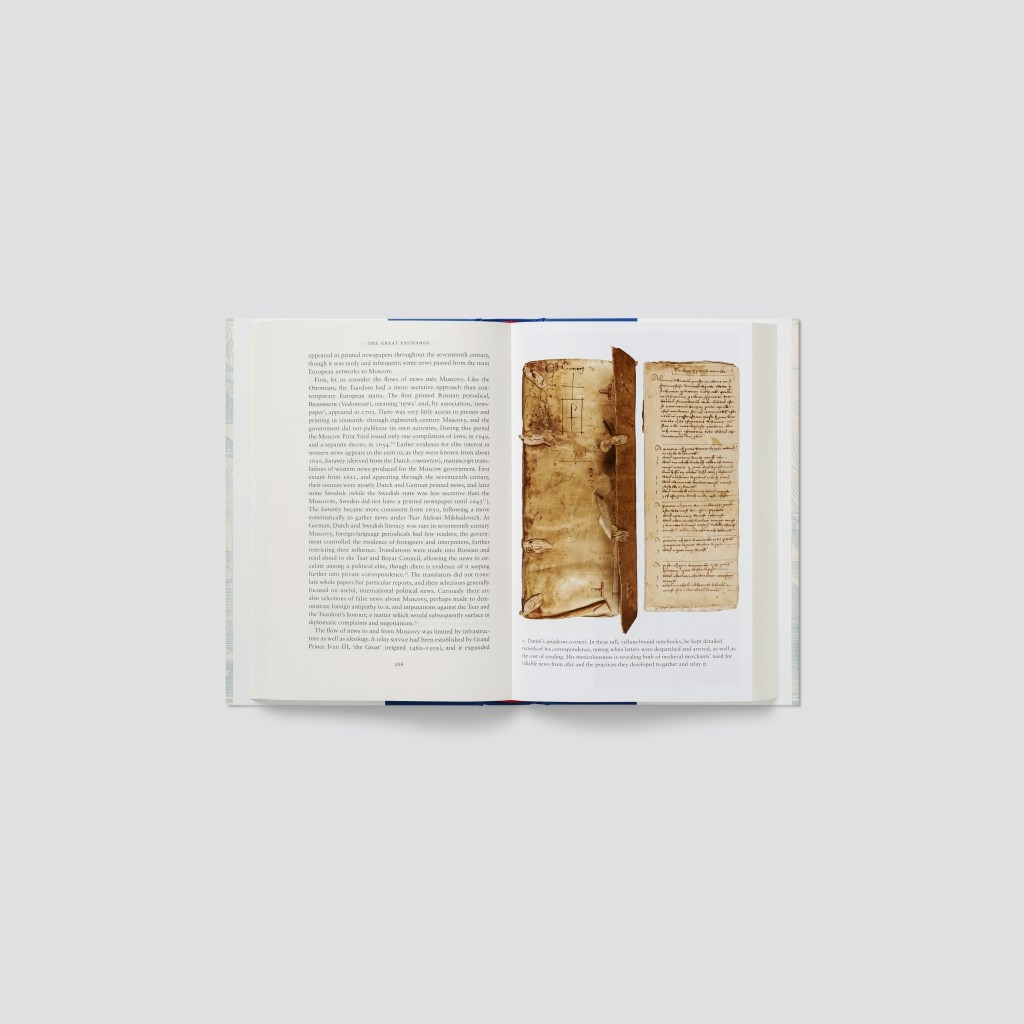
Today The Great Exchange is published. It’s a sunny quiet day by the sea. Uneventful. No reviews yet, just a teasing blog. How to mark it (apart from some wine)? Though it was written, in the final incarnation, quite quickly, there were many years of research and collaboration behind it, and, as my editor gently pointed out to me a few weeks ago, my first book about early-modern news was published 32 years ago (I wrote it when I was a graduate student). So there’s always going to be a feeling of quietness about this day.
Some thoughts about the title. The Great Exchange: in the 1620s St Paul’s Walk was ‘the whole worlds Map . . . a heape of stones and men, with a vast confusion of Languages, and were the Steeple not sanctified nothing liker Babel. The noyse in it is like that of Bees, a strange humming or buzze, mixt of walking, tongues and feet: It is a kind of still roare or loud whisper. It is the great Exchange of all discourse, & no busines whatsoever but is here stirring and a foot.’ That’s according to John Earle, in a 1628 book of character sketches. He doesn’t intend to praise or appreciate the place. Rather, it is ‘the generall Mint of all famous lies … All inventions are emptyed here, and not few pockets… [it is] the other expence of the day, after Playes, Taverne, and a Baudy-House … the principall Inhabitants and possessors, are stale Knights, and Captaines out of Service, men of long Rapiers, and Breeches, which after all turne Merchants here and trafficke for Newes.’
But: ‘the great Exchange of all discourse’, where Exchange is at once the communication, a transaction, and the place where the world converges, that’s a powerful idea.
It’s striking how, in the world of early modern satire, some deeper truths appear in a cloud of dust and scorn. People complained about news, its diluvial excesses, its misrepresentations and falsehoods, long before newspapers. Often these satires were driven by social prejudices more than acute insights in the nature of the media. But sometimes, as with Earle’s metaphor, there’s a brilliant flash of insight. Not the picture of soldiers with rusty swords strutting through St Paul’s, which is a cliché, nor the minting of lies; but the great exchange in which everyone turns into a merchant and buzzes. That captures so much in so little.
 Joad R Wren