
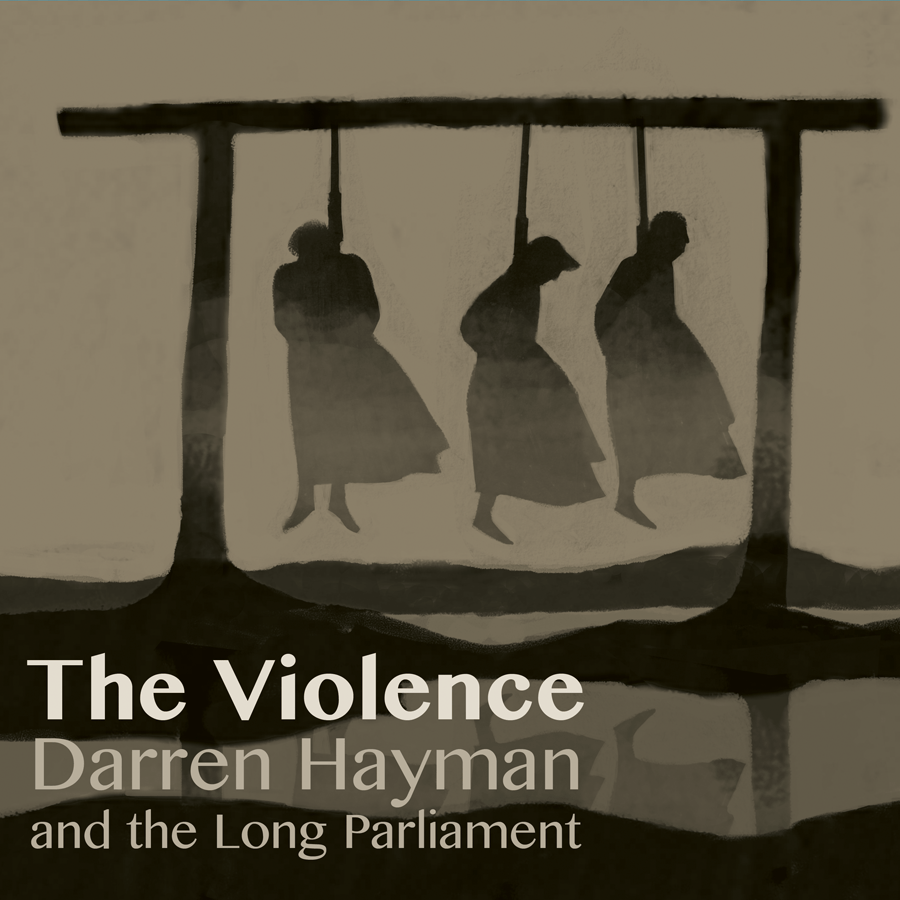
This question grows out of a conversation I had with Darren Hayman (@darrenhayman) about seven years ago. We were discussing his album The Violence (2012), and in the process of recording the songs that would end up in Songs for the Prophets (2019). If memory serves we were on the lower slopes of St George’s Hill, trying to get into the gated community so we could record a song about Gerrard Winstanley, who had established a Diggers’ commune there in 1649. We failed, and recorded my song on adjacent Cobbet’s Hill. The conversation didn’t end there, but if I remember rightly the germ sprang from the unpromising soil on that occasion, as we sat in the sun listening to the pile drivers laying the foundations for another rock star’s or footballer’s mansion: how long can an explanation of a song decently be? If a song requires a lengthy introduction for the audience to make sense of it, has it in some way failed?
Must a song tell its own story, be self-sufficient? Often you’ll hear singer songwriters introduce a song on stage along the lines of: “I conceived this song while I was driving along the A10 between the north circular and Cambridge, and I was thinking about my mum, and realised that all of those times she took me to the sweet shop on a Friday afternoon she was making up for the fact that my dad was going to be home late because …” And then they’ll fix the capo into place and start strumming and sing: “I was driving on the A10 / somewhere between the north circular / and Cambridge / and thinking about my mum / when I understood …”
But I’m not talking about those sorts of song-introductions. Instead, I’m asking about songs and novels that rely on some kind of prior knowledge – usually but not exclusively of historical context – for their full meaning to be realised. You can appreciate The Beatles’ (Paul McCartney’s) ‘Blackbird’ (1968) without thinking about the civil rights movement. But does Pink Floyd’s ‘Shine on You Crazy Diamond’ (1974–5) simply sound better with some explanation of the involvement of Syd Barrett? And if you’re listening to Darren’s song ‘Elizabeth Clarke’, do you need to know who she is, why she’s being hung, why her body can’t touch those of the other swinging witches, why does she need someone to pull her ankles? And if the answer to these questions is yes, then is a couple of sentences in the sleeve liner notes acceptable?
Yes, right? But probably not two pages.
It’s a little more straightforward with fiction, because the form is longer, and so it’s easier to work in discreet explanations of, say, epidemiology.
It’s also a little more straightforward when writing historical fiction about World War II, because you can assume more general knowledge about the period. Less so with Tudor or Stuart (let alone medieval) Britain. It needs footnotes: but footnotes in novels, more than a couple anyway, for purposes other than humour, are a bore. So what to do?
Instead you have to show, show how a printing press works, show where the paper comes from, show how books are made and handled, show who is on the throne, show the status of medicine, show the theology underpinning questions about whether it’s right to flee the plague or face it. It’s the old writers’ mantra of “show, don’t tell.” But the more you observe it, the more you find yourself slipping, involuntarily and consciously, into the realm of writing history. Nothing is self-explanatory here; it’s all artificial.
 Joad R Wren